


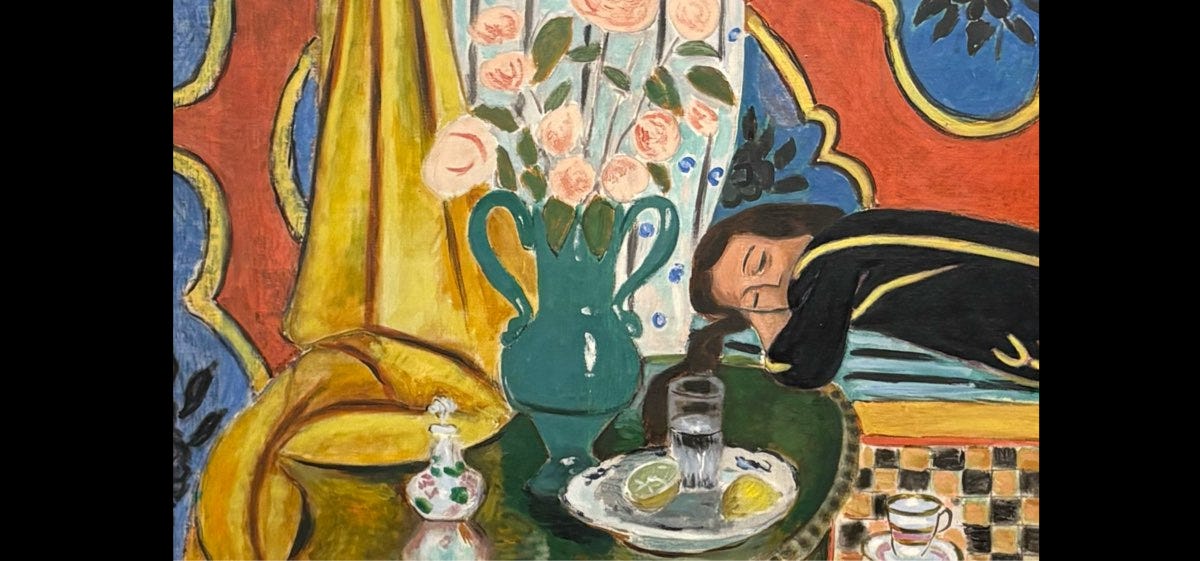
Grief as Fear
Here is the single most oft-repeated phrase I encountered in memoirs about loss:
I never knew grief felt so like fear.
Nearly every author I read borrowed the line, using it as a touchstone while they groped for language to describe the emotional terrain after loss.
The line comes from C. S. Lewis’ A Grief Observed, his account of the first year after his wife Joy’s death. Writers far and wide borrowed it—Christian and secular, young and old, men and women alike. Everyone seemed to resonate with this idea.
At first, it felt like the grieving community’s secret handshake. Yeah, grief is terrifying. But when I kept seeing it, another thought occurred to me:
This word grief must be oddly feeble if it takes a completely different one—fear—to explain what it feels like.
And once I had the thought, evidence began to gather in support of it.
‘Complicated’ Grief
Another sign the word is flagging is how we often we qualify it.
Years after my mom and sister died, I learned that Columbia University, ten blocks from my apartment, had a Center for Complicated Grief. For a moment, I was beside myself that such a resource had been so nearby and I hadn’t known. Immediately I jumped on their website and started scrolling.
On the homepage there was a quiz inviting visitors to assess their response to a recent loss and determine whether they might be experiencing this ‘complicated’ thing.
After taking the quiz and investigating a little further though, I ended up crestfallen. It felt so clinical and detached. It immediately made me want to run across town to a museum. And their timeline was almost absurd; you had about six months to be a wreck. After that, your situation was considered complicated.
I closed my laptop. I was sitting at the same kitchen counter where I had baked non- stop during the first year after my mom and sister died, hardly leaving the house. It wasn’t until the second year that I was even capable of getting help.
I thought to myself: Dear Lord, isn’t all grief complicated?
And I swear I heard back: Yes.
__________________________________________________________________________________
One place that reliably offers nuance when depicting grief — scripture. The Bible thoroughly resists any attempt to compress or simplify the pain related to loss and refuses to settle on a single word.
Instead, it describes the facets of grief and its postures, and along with that offers a sprawling vocabulary: mourning, lament, anguish, pain, distress, bitterness, affliction, humiliation, and the word for broken, as in both “not working” and “brokenhearted.”
And these English translations are themselves only approximations of the richer and more numerous Hebrew, Greek, and Aramaic words.
Here’s just a taste:
I am utterly bowed down and prostrate; all the day I go about mourning…I am feeble and crushed; I groan because of the tumult of my heart. Psalm 38:6-8
For these things I weep; my eyes flow with tears; for a comforter is far from me. Lamentations 1:16
And the one that made me cry while writing:
Do not call me Naomi; call me Mara, for the Almighty has dealt very bitterly with me. I went away full, and the Lord has brought me back empty. Ruth 1:20-21
Here we are brought into the realms of sound (groan), physical reaction (tears, tumult), posture (bowed down), isolation (a comforter is far), identity (so lost as to require a new name). And perhaps, the one we’ll keep our eye on most keenly in this letter, time.
Grief is a Verb
In scripture, grief has no expiration date; in fact, human pain and loss are often described using the present participle, a continuous verb tense. This includes the summa version of Jesus’ grief in the garden: weeping, groaning, sweating, bleeding, pleading, falling, waiting, praying.
Like the rhythms of life itself, grief is happening, hurting, healing — and then happening again.
Grief is an ‘ing’, not a thing.
But our word grief is a noun. Remember from grade school — a person, place, or thing. Nouns tend to have edges and finite shape. We often act upon them: we drive a car, we eat our food, we buy a new bag on eBay. (I just did that! I’ll post a pic.)
But you cannot drive, eat, or buy grief any more than you could drive, eat, or buy a rushing river.
It’s unfortunate too, and not grief’s fault, that it ended up monosyllabic, which, on top of everything else, gives it an almost truncated, administrative feel. There’s nothing ebbing or flowing about it, nothing mellifluous either. In this bluntness, it always strikes me as too eager for transcendence. Hasn’t it been a year now — with the grief?
I can almost hear ‘grief’ protesting: But I never applied for this job! This is all such a big misunderstanding…
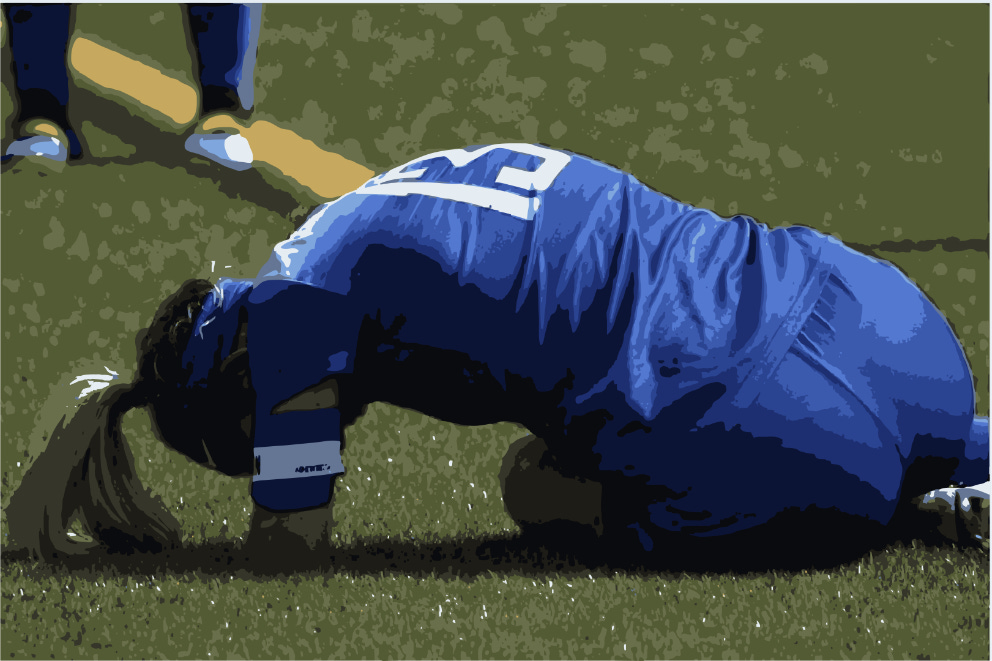
Good ‘Grief’ — Staggering Off the Field
This much seems clear: the word ‘grief’ is exhausted.
Can we agree that it’s simply been asked to carry the weight of too many other words for far too long? My vote is to give it a break.
Here are two hacks: first, I use the word ‘grieving’ instead of ‘grief’ whenever sentence structure allows. It might just be the case that the word grieving gives someone you love the permission they need and crave — to just let things be what they are in that day or moment. And the sense too that they are in process and moving forward — albeit in some mysterious way.
Second, I started a list with my friend Kari Jo a few months ago at a coffee shop of different words that capture better the wild and changing nature of deep loss. I found it so satisfying. Among the words on our list that morning: freezing, blind, hobbled, disoriented, blank.
Spring has sprung, my friends. It’s time for new things. Let’s consider giving ‘grief’ some electrolytes and a couple minutes on the bench.

What word or words top your list to capture the experience of grief?
The File
All There Is with Anderson Cooper: Guest Stephen Colbert — on how his grief changed over many decades. Colbert lost his father and two older brothers in a plane crash when he was a child. This is an extraordinary interview.
I’m Grieving As Fast As I Can: How Young Widows and Widowers Can Cope and Heal, Linda Feinberg, 1994. I love the title for obvious reasons. This book was waaaay ahead of it’s time. It was apparently on my neighbor’s bedside table for years after she lost her husband suddenly in her mid-forties.
Kitchen Dancing: The Bright Side of the Road, Van Morrison.
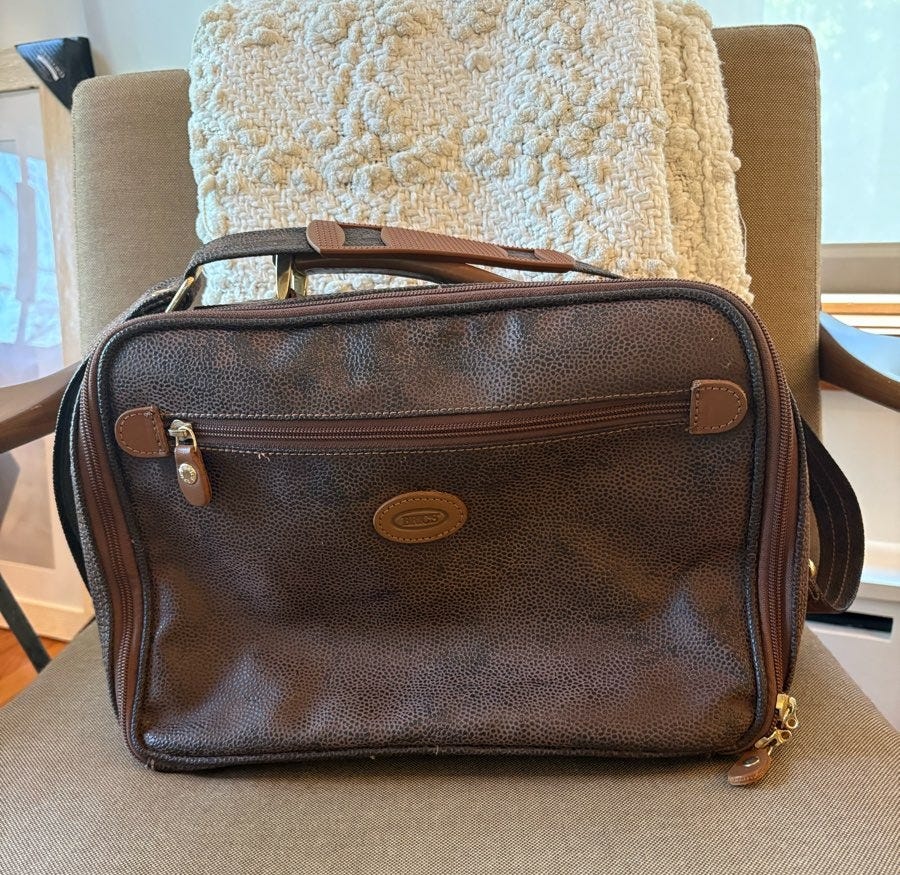
p.s. Here’s a noun: the toiletry travel bag I bought on eBay. Decent.
I am re-reading a book and this time underlining what I want to try and remember…….I just underlined this yesterday sitting on an airplane on our way home from Florida. “I could not keep myself safe from pain or danger.” I read and reread this line many times because it says what I’ve tried to hide, avoid and ignore and no longer can. Just thinking about about my parents’ fatal car accident or the decision and follow-thru to put our two beloved dogs “down” bring tears, heartache and yes - grief………a condition of sadness that will not go away. I love what Jill wrote below…….it is complicated! And not because it never goes away, but because this side of Heaven we’ve lost something we will never ever be able to replace……..a relationship, a beloved person, pet or even thing like a “home”. A true gift that can never be replaced. All we’ve got left are memories and those memories bring tears of loss………..our hearts and minds remember……..and there is absolutely NOTHING we can do keep ourselves safe from the pain or danger of what happens on this earth, in this world. and in our hearts, minds and bodies. Life is hard! and if it hasn’t gotten hard yet, there is nothing you can do to keep yourself safe from pain and danger that one day will come if you have truly loved. YET! There is HOPE! The PROMISE of “no more tears”. Jesus!
Oh how I look forward to the day when I get to sit at a coffee shop with you and brainstorm new and better words for "grief" or chat about other hard and beautiful things!!! I will wait patiently for that day and in the meantime, share a few of my thoughts here....
1. I've always struggled (protested) any sort of timeline on grieving. It makes me angry. I see grief as part of love and no one expects that to have a timeline.
2. My dear friend died last Saturday. She had stage 4 cancer but her passing came SO FAST! Our kids just got married at the end of December and she was the most beautiful mother of the bride just 4 months ago. Her daughter is staying with me for the summer and I know when she goes to sleep and when she wakes up because I can HEAR her grieving through the walls of my guest room. I can FEEL the love she has for her mom through the sounds she makes. All the senses are heightened. It is intense and raw and painful. I know that specific raw part of grieving will become less intense but I know we will always grieve her because we loved her so much. It is so bittersweet.
3. I have moved into using a made-up word to describe grieving. JORROW - joy in sorrow
These two are not mutually exclusive of one another. In fact, I think they reveal greater depths in one another when they are held together. I think that is the only way I could call grief "complicated" - like your neighborhood grief center. It is complicated not because it lasts a long time but because you only grieve when the thing/person you lost was such a gift. I think that will always be complicated. Pity the person that has nothing to grieve.