


The trees were swallowed whole by the dark as I drove north up the Palisades. The next day would be the first anniversary of my sister’s death, and I’d decided to spend the day upstate, alone, where we had a home and where my sister and mother were buried a couple of feet apart.
I wanted the day off, I’d explained—no morning rush, no emails, no groceries. No pretending I wasn’t living on the edge of a howling abyss.
I pictured going for a long walk and eating lunch out. I’d buy flowers and place them at my sister and mother’s graves. The stuff people do, I figured.
As I pulled into the gravel drive to our house, I immediately noticed how dark it was. Some outside lights must have blown their bulbs. I struggled, pulling and tugging on the frozen gate latch, slipping when it gave way on a patch of ice, cursing as I caught myself. My hands were turning numb as I fumbled with the front door key.
When I finally stepped into the kitchen and shut the door behind me, I stood in the empty house, my back against the pantry.
From here I could see the living and dining area where we spent all our time and the inky black windows facing the river. Everything was quiet except for the low hum of the fridge and the high sound of the wind sighing through the trees. A car drove by, its headlights silently crossing through the space.
Like the year before, as Lis was dying, there was a penetrating cold. Even the cold of the stone pathway had already seeped through my boots. I immediately started to cry as I stood there, a tar-like sorrow filling my middle. My eyes scanned the dining table and chairs. So still, like a picture.
Somehow the house did not seem like mine; I was seeing it from some remove inside myself, but not like a gap of time or memory. It was distant and startlingly objective. I wanted to turn it warm, make it mine. But the distance held fast and I couldn’t reason with it.
Why was it like this? It all seemed so strange and far away? It looked like a stage set to me, but after the season is over and the theater’s gone dark.
This abstract feeling was familiar to me since my sister’s death. It was most alarming in dealing with her belongings: her earrings and rings, her papers, CDs, a few of her pie plates and bread tins. She was a wonderful baker.
I saved the things I couldn’t part with after Jenny, my older sister, and I had sorted through her valuables and furniture. Some of these things I saved for her son Jack. At sixteen he didn’t want or need them. But one day, I thought, he might. Maybe later they would mean something to him.
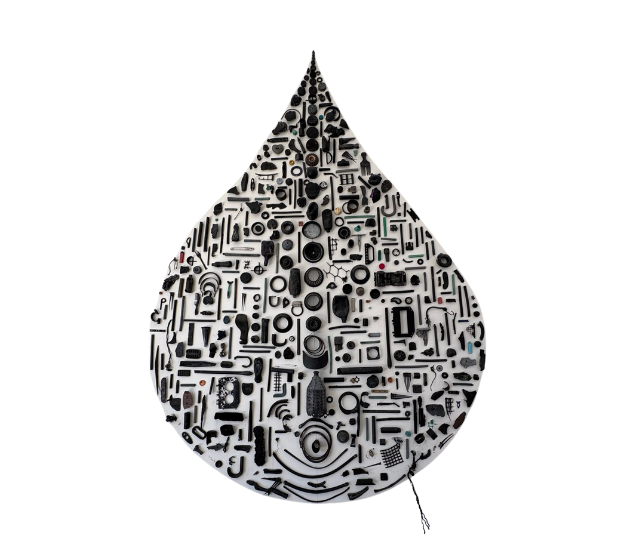
But I could make no sense of them myself as I packed them for storage. Without her to animate them, to give them a sense of place or purpose, they looked utterly lost to me. They also seemed immutable—safe from human things like change or decay, but also unable to heal or move on. Stuck in time, in a purgatory of objects.
When I’d grab a box to re-organize or label, I remember feeling sometimes as if I’d come upon a murder scene—like her things should have a chalk outline around them, as if her death had been violent.
At times, as I wrapped and boxed them, they seemed furious too. Offended. Bereft. I used to whisper over them as I packed, careful not to squeeze them in too tightly. Sometimes they’d stare back at me, an insistence like a witness, and I’d hold my breath at their simple declaration: I remember too.
But I was in my house now. I’d come here to grieve. This was my home, my family’s house. Why was it happening here? Why did this place seem so unreachable? Unfathomable? Absurd even. This was supposed to be my life.
Wasn’t it strange and wrong, I thought, that the house was still even here? That our small wooden house would remain in the world—the backyard, the train station, the village, the car, the furniture, the generator, all of it, the dishes sitting upright in the drying rack, their readiness a mocking, when Lis was gone.
What was it all for? This stuff? Why would I want all this when I didn’t have her?
My phone began buzzing in my bag. James, certainly. Calling to make sure I’d arrived safely. I let it ring.
Then a crazy thought came—it wasn’t quite conscious or even really a formed idea; it was more like an urge or a taunt. The quandary of it passed through me and I felt my body react, my heart lurch. I caught it by its tail before it made off.
Could I have bartered things away to keep her? Had I missed some opportunity, a workaround? Some way to make a deal?
My God, I thought. I’m losing my mind.
Psychiatrists call this kind of awareness ‘insight’ and consider it, ironically, evidence that you’re not losing your mind. Truly crazy people don’t have it.
I tried to refocus my thinking, to tell myself the things I knew were true: God is in control. I have to take care of the kids. I can’t go crazy. I took a deep breath. I came here to grieve, I reminded myself again. It can’t be that hard. Everyone suffers.
But the year of white knuckling my sanity and hiding in my kitchen and whispering over Lissy’s boxes were proof: I had no idea how to be this sad.

Postscript: Five and a half years after this night, I returned to those boxes on a very rainy spring day for the first time. I will share the experience in a full letter in the months to come. Suffice it to say, I had a powerful reunion with my sister’s things that afternoon as I sat in my dripping raincoat on the floor of the storage unit. Tears ran down as I pulled her things out one by one and held them and missed her. Their frightfulness had all but vanished and they looked to me instead solid and restful. The violence that had seemed to grip them was gone as was that wild, feral sense of injustice. I took one of her pie plates home with me that afternoon and every summer when the berries ripen, I make a cobbler. I’ll never not miss her; but there is so much more peace now where there had been such fierce and wrenching anguish.

The File
Derealization in Grief and Trauma – a quick look at what it is and how to help ground yourself in reality if you suffer from episodic dissociation.
After Great Pain, a Formal Feeling Comes, Emily Dickinson
Laughing Gut Kombucha – what’s good for your gut is great for your sweet head. My latest obsession. I think the lavender is my favorite.
Kitchen Dancing – And She Was, Talking Heads. This song was apparently inspired by a friend of David Byrne’s who tripped on LSD near a chocolate factory. He thought it was funny and referred to it as ‘tacky transcendence’. I’ve never dropped acid, but I felt like parts of my grief journey got pretty darn close.
* Background Music Featured: For All I Know (Instrumental Version) - Anna Landstrom - Epidemic Sound
Outside Your Reach (Instrumental Version) - Victor Lundberg - Epidemic Sound
Let me know if you have a story about something left behind by someone you love? I’m so interested in this aspect of grief.
Kara so beautiful and answered so many questions that have created confusion for me in similar regard. Thank you...
Wow, Kara, this is beautiful. That scene of you returning home and it not being the familiar warm comfort you wanted/expected was so devastating and so real. Thank you for putting it into a context that makes some sense, and for sharing it with us. The experience of loss is at once so personal and so universal, and you write about both so eloquently.