


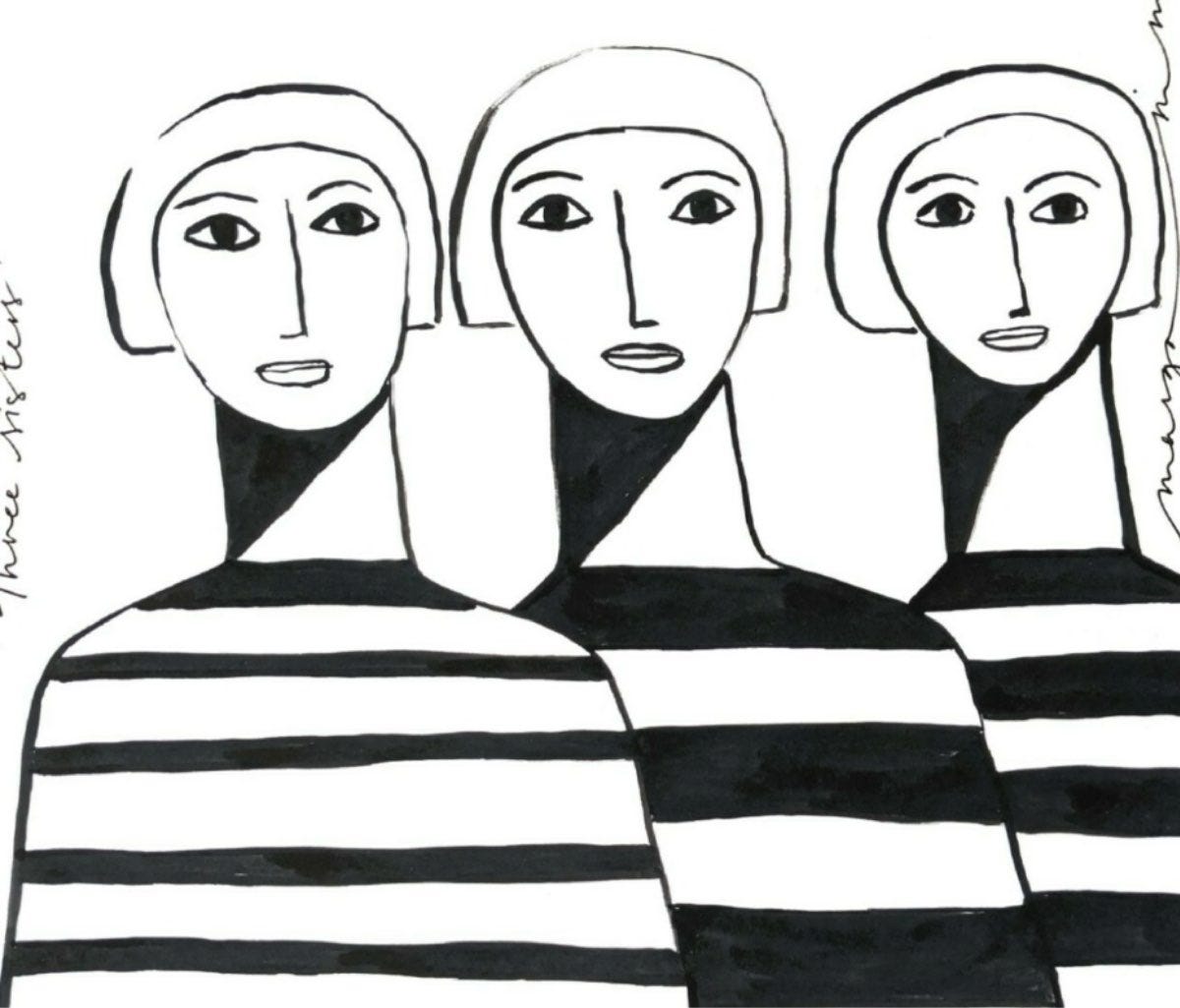
I crested the landing, blinking hard when I hit the wall of lights and noise. Massive building-sized images of adolescent girls were cat walking toward me, flickering from nearly every surface, selling things but I couldn’t tell what. A jackhammer tore up the street a few yards away, so loud it made my eyes water.
Times Square. At midday. The most populous few acres on earth.
In the twelve months prior, I’d rarely left my house.
The grief counseling I’d signed up for at my church happened to be at their offices in the middle of midtown. I nearly bailed.
I can make an excuse, I thought. I’ll just call and say something came up with the kids.
But I kept remembering this thing my friend Carrie once said to me—that the whole of the gospel can be boiled down to two words: help me. And the echo of her words kept running through my mind.
Just get there, I thought. Just sit in the chair and tell her your sister died. That’s it. That’s all you have to do today.
So that’s what I did.
Meeting Naomi
I remember little else from that first meeting except that my counselor, Naomi, seemed mercifully un-churchy. She was warm and down to earth. She looked like the picture I’d seen on the website, which is to say lovely: straight black hair, coal-colored eyes, a beautiful smile. Her accent was, indeed, a plus. (She was from South Africa.)
That first session was similar to what you might expect from a traditional counseling session except that at the end she prayed for me:
God, thank you for your daughter, Kara...
And that was all I heard. The single word daughter shot through me.
I realized when she said it that I did not feel like God’s daughter at all. Nor could I locate in time when I’d lost that sense of belonging to him, unassailably, unequivocally.
I rode down the elevator thirty-some floors and wandered out of the building onto Sixth Avenue. Utterly exhausted by the ordeal, I took a cab home instead of the train and stared out the window as the city flew by.
If I don’t feel like God’s daughter, I thought, what exactly do I feel like?
And the thing that popped into my head right then was waitress.
It was easy for me to picture this—I waited tables throughout my twenties when I worked as a performing artist. But in the scenario I conjured, God seemed like a moody character: tetchy and hard to read.
He seemed like the kind of guy you might put at a corner table and keep an eye on from afar. You’d refill his coffee but avoid direct eye contact. When he was finished his meal, you’d drop the check at the edge of the table. Hey, have a good one, you might say over your shoulder.
And keep walking.
I knew this was all wrong. But I was able to confess it.
A waitress is not like family. They stand at attention. They wear a uniform. They’re on the clock. They’re busy, eager to please. They work for tips.
A daughter sits in your lap. Plays with your hair. Eats off your plate. And cries when she doesn’t get what she wants. Protests. Demands. Is consoled. Is redirected. Is loved and adored. Is delighted in. And delights.
The two are really nothing alike.
The Mountain
It was in my second session that I gave Naomi the whole story—my mother’s cognitive decline, my sister’s diagnosis, the two of them dying together, the lost time with my boys and my apparent inability to move on or to heal.
At the end of that session, I was crying and Naomi was crying and she forgot to accept payment.
This is different, I thought as I left the building and started walking west in the late day sun.
Over time, I realized Naomi wasn’t bent on solving anything—not Lissy’s death or my mother’s descent into madness, not even my dysregulation and dissociation. She simply sat with me in all the anguish and emptiness. Especially in the beginning, it was mostly that.
She said in one of our first meetings that it would be God who would heal me. Not me and not her. I found her confidence in it all fascinating and was drawn to it. Her faith was fact.
I can borrow it, I thought.
She also explained that the journey through grief would not be unlike trekking through mountainous terrain. It would be hard, some days exhausting. Sometimes I would have to stop and rest. And some days there would be switchbacks. I’d have to go back down to go up.
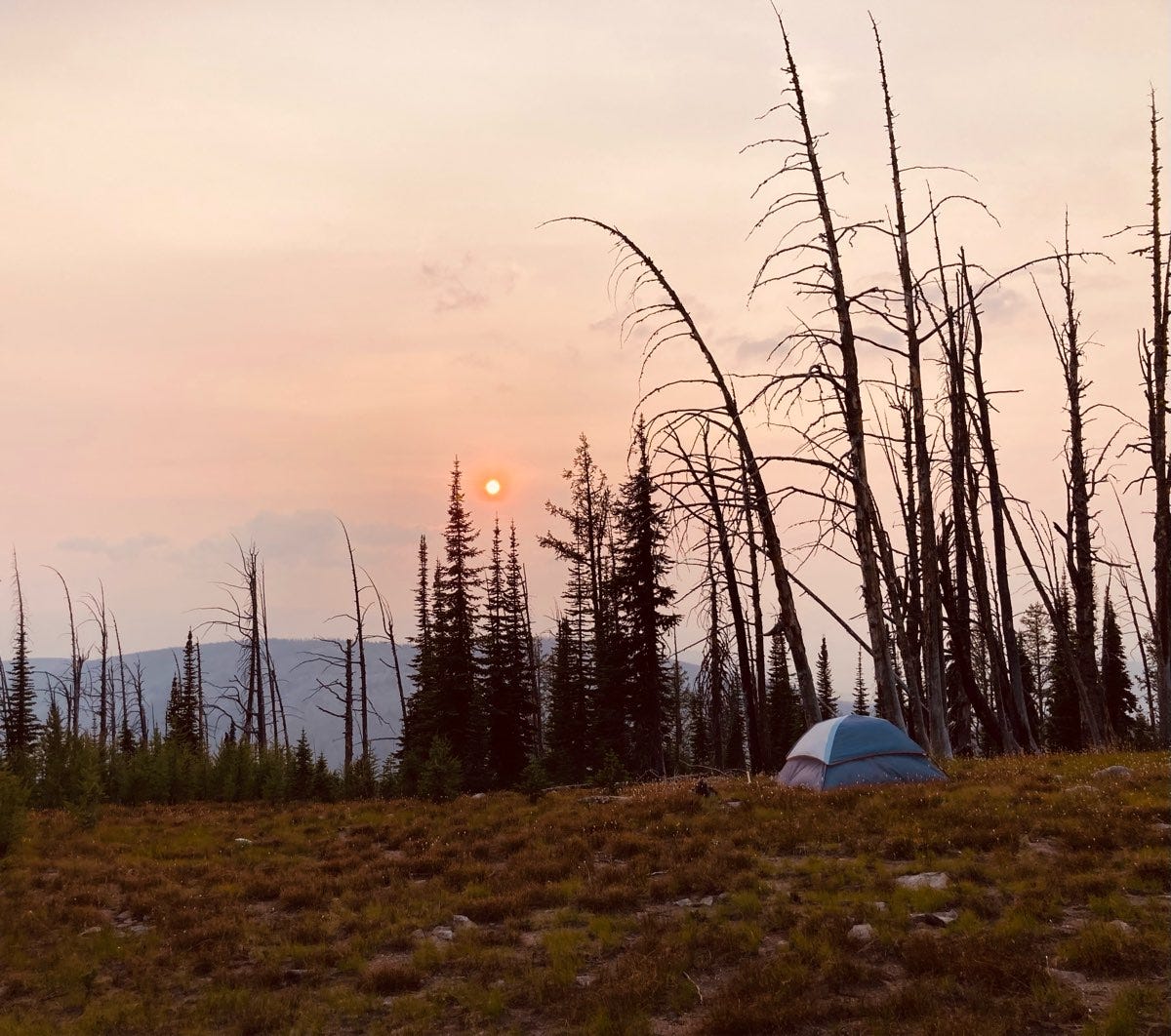
But Naomi seemed absolutely certain that one day I would come down off the mountain and be able to look back up at it. Not that my grief would be finished so much as metabolized, integrated.
The unintended consequence of the mountain metaphor, though, was that I became literally obsessed with it. This was partly I think because it was a metric to which I could attach myself and the process. It made the whole thing feel less like a massive waste of time.
The sense of waste had become a huge preoccupation during these months. I could not believe I’d already spent almost three years of my life—and my children’s young lives—preoccupied with watching people die. And now, in order to “move forward,” I had to haul myself into midtown once a week to go on about it.
And once we started digging around in all these things—grief, pain, loss— it turned out I hadn’t worked very well through much of my earlier life losses, and so we were compelled to revisit my past.
I was on an endless detour. And it was the mountain concept that gave me the sense that I was, albeit mysteriously, somehow moving forward.
All I wanted was to get my “real life” back.
And so every week, for months, I inquired about the mountain:
Naomi, how far up do you think I am now?
Do you think I’m halfway up yet?
Will I know when I get to the top? Will you know? How will we know?
If I take a month off this summer, will I lose ground? Do I have to go back down?
She always smiled that steadying smile of hers and said, There’s just no way for us to know that right now.
And I would sigh. Or cry. Or both. And come again the next week—through the traffic, the cat walking lip-gloss girls, the jackhammers, the Broadway show marquees. I remember in particular—Come From Away.
Three Sisters
At some point, well over a year into counseling, I stopped asking about the mountain. I honestly think I forgot about it.
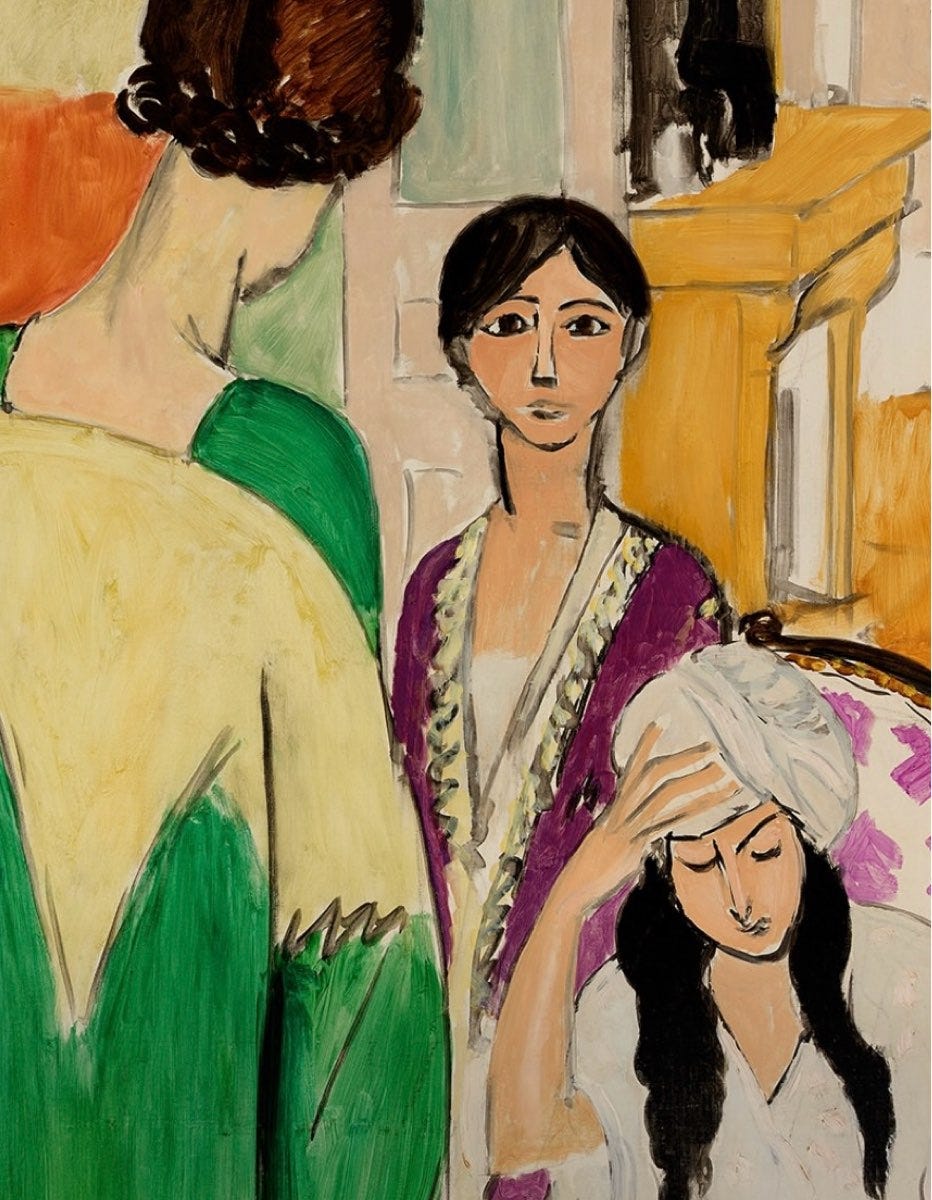
But I do remember a sobering conversation I had with myself around then. I was thinking about Chekhov’s Three Sisters, the great Russian play. I’d read it in my twenties and the troupe I performed with in Seattle used many of its great speeches and monologues in our live performances.
The sisters spend the entire play bemoaning their fate. They’d left Moscow for a sleepy, rural village. No one plays instruments after dinner or speaks French in their far-off province. The sisters are listless and bored, filled with longing, gripped by it.
I’m like them, I thought. I’m in some outpost — way, way outside Moscow.
Suddenly, it occurs to me that I’m repeating the central tragedy of the play— the sisters’ incessant wanting—their wishing for another realty. They, in fact, never make it back to the capital city.
Maybe this is not a detour, I think to myself. Maybe this is it.
Maybe this is just my life. And I have to stop waiting for something else.
It’s the difficult truth Chekhov’s sisters never round on.
But I finally did.
I finally, finally surrendered.
I was nowhere. The correct metaphor was not a mountain. I was stalled out in some non-place, some desert, some featureless nowhere.
And I finally stopped shunning the place, dismissing it as an aberration.
I picked my eyes up off my weary feet and, for the first time really since my sister died, I took a good look around.
And then I heard a voice.
My dearest readers: have you ever felt like you were on an endless detour only to abruptly discover: ‘I think this might be it. This is my path. This is my life.’ ?
The File:
If by some fiat I had to restrict all this writing to one sentence, this is the one I would choose: The summit of Mt. Everest is marine limestone.
Kitchen Dancing: The Cranberries, Dreams, remastered.
What did the voice say? What a cliffhanger, Kara!